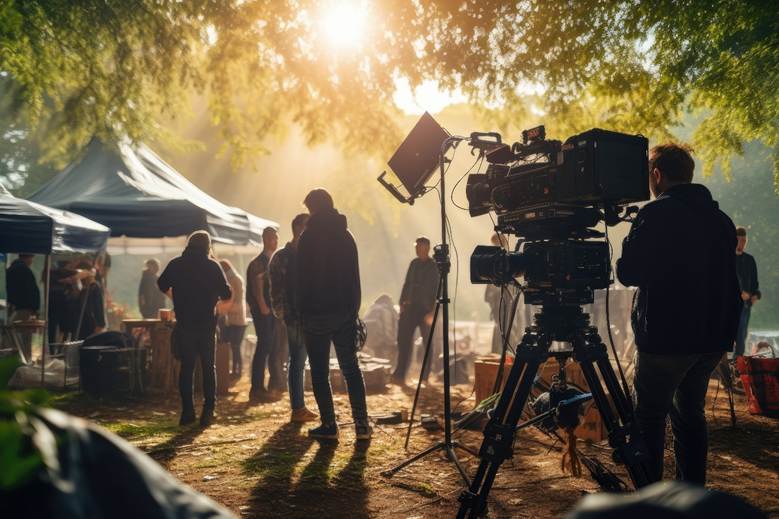
A great movie can keep audiences entertained for a couple of hours, but the stories surrounding how it was made can keep fans talking for decades. Once the credits roll, there is an entirely different world to explore: actors who almost landed famous roles, special effects that required surprisingly simple tricks, scenes that were changed at the last minute, production problems that forced filmmakers to improvise, and moments that turned out completely differently from what was originally planned.
For movie fans, these stories offer something that the finished film cannot. They reveal the messy, creative, and sometimes completely unexpected process behind something that looks polished and effortless on screen. Alex Kurtzman understands that this is part of what makes movie trivia and behind-the-scenes stories so much fun. Knowing how a memorable scene came together does not necessarily ruin the magic. In many cases, it makes the movie even more entertaining the next time around.
The Actors Who Almost Got the Part
Casting stories are among the easiest behind-the-scenes rabbit holes to fall into. Once an actor becomes closely associated with a character, imagining somebody else in the role can feel almost impossible. Yet movies frequently go through long casting processes before finding their final stars. Actors audition, turn down roles, encounter scheduling conflicts or simply lose out because filmmakers decide to take the character in another direction.
That creates one of the most entertaining movie-night questions: What would this movie have looked like with somebody else? The fun is not necessarily about deciding whether another actor would have been better. It is about realizing how much a single casting decision can influence everything else. Actors bring their own voices, mannerisms, comedic timing and personalities to their characters. Chemistry between cast members matters, too. Change one performer and an entire movie can suddenly have a different energy.
It is also fascinating to learn about the auditions that changed careers. An actor who was relatively unknown may have walked into a room, delivered a few lines and eventually become permanently associated with a character recognized around the world.
Looking back, it can seem inevitable. Behind the scenes, it usually was anything but.
Practical Effects Make Movie Magic Feel Even More Impressive
Computer-generated imagery has dramatically expanded what filmmakers can put on screen, but practical effects remain a favorite subject among movie fans. There is something wonderfully entertaining about discovering that a terrifying monster was actually an elaborate costume, a futuristic hallway was a carefully constructed set or a dramatic weather sequence involved enormous fans, water tanks and a crew working just outside the camera frame. Practical effects can include miniatures, puppets, prosthetic makeup, animatronics, controlled explosions, mechanical rigs, fake environments and countless other techniques.
The best examples create a funny contradiction. Audiences know they are looking at something artificial, yet understanding how it was created can make the effect more impressive. A giant landscape might actually be a miniature. An enormous crowd could involve clever staging and repetition. A creature that appears alive may require several puppeteers working together. A seemingly straightforward stunt might depend on carefully placed wires, hidden padding and weeks of rehearsal.
Suddenly, a few seconds of screen time represent hours—or even months—of work.
That gives fans a new appreciation for the craftspeople whose names may fly past during the credits. Movies are not made only by actors and directors. They are built by costume designers, makeup artists, stunt performers, production designers, camera crews, prop makers, editors, sound teams and hundreds of other specialists.
Filming Does Not Always Go According to Plan
The finished version of a movie usually hides the chaos involved in making it.
Weather changes. Equipment breaks. Locations become unavailable. Actors get injured. Sets do not work the way everyone expected. A scene that sounded great on paper falls flat once cameras begin rolling. That is where some of the best behind-the-scenes stories begin. Filmmaking requires an enormous amount of planning, but it also requires people to adapt quickly when those plans fail. A limitation that initially seems like a disaster can force filmmakers to come up with a more creative solution.
Those stories are particularly satisfying because audiences already know the ending: the movie got made. Watching a tense action sequence becomes even more interesting after learning that the crew was racing against daylight. A peaceful outdoor scene takes on a different meaning when fans discover that everyone was freezing between takes. A complicated sequence becomes more impressive when viewers learn how many attempts were required to capture it. Sometimes the obstacles even improve the final movie. A technical limitation can encourage filmmakers to show less, allowing the audience’s imagination to do more of the work. A location problem can inspire a visually stronger setting. An unexpected performance choice can completely reshape a scene.
Movies may be carefully planned, but happy accidents have always been part of the process.
Deleted Scenes Offer a Glimpse at the Movie That Could Have Been
Deleted scenes have fascinated fans since long before streaming services made bonus content easy to find. They provide access to an alternate version of the story—one that existed during filming but disappeared before audiences reached the theater. Scenes can be removed for countless reasons. A movie may be running too long. Information could feel repetitive. A subplot might distract from the main story. Test audiences may respond poorly to a sequence. Occasionally, filmmakers simply realize that a scene they loved individually does not work within the finished movie.
Deleted scenes can answer lingering questions, reveal more about a character or completely change the way fans interpret a relationship. They can also demonstrate one of the hardest parts of filmmaking: knowing what to leave out. More footage does not automatically create a better movie. Editors and directors have to think about pacing, tone and momentum. A beautifully acted five-minute sequence might still need to disappear if the movie works better without it. For fans, however, that discarded material remains irresistible. It is like getting a peek into an alternate timeline.
Tiny Creative Decisions Can Have Huge Consequences
Some of the most interesting movie stories involve choices audiences barely notice.
Why does a character wear a particular color? Why was one location chosen instead of another? Why does the camera remain still during one conversation but move constantly during another? Why does a famous character have a particular hairstyle, costume or prop? These choices can be practical, symbolic or completely accidental.
Costumes help establish personality before a character says a word. Lighting can make the same room feel comforting or threatening. Music can transform an ordinary conversation into something emotional. Production design can quietly tell audiences when and where a story takes place without requiring anyone to explain it. Learning about those decisions turns rewatching into a different experience. Instead of focusing entirely on the plot, fans begin noticing the filmmaking itself. A familiar movie suddenly contains details that were hiding in plain sight. That is one reason director commentaries, making-of documentaries, interviews and production books have remained popular. They teach audiences how to look at movies differently.
Famous Moments Often Have Surprisingly Ordinary Origins
Iconic movie moments can eventually feel larger than life. They become memes, Halloween costumes, references, quotes and pieces of popular culture. Behind the scenes, however, they often began with something remarkably ordinary. A memorable line may have been rewritten shortly before filming. A funny reaction could have happened spontaneously. A prop that became instantly recognizable might have been one of several designs considered by the production team. A scene that audiences assume required elaborate planning may have been solved with a surprisingly simple camera trick.
There is something charming about discovering the human story behind an iconic moment. It reminds audiences that nobody on set necessarily knew which five seconds people would still be talking about 30 years later. Filmmakers can plan for dramatic impact, but they cannot completely predict cultural impact. Sometimes a minor character becomes a fan favorite. Sometimes a throwaway joke becomes the most quoted line in the movie. Sometimes a costume, song or prop develops a life far beyond the film itself.
Behind-the-Scenes Stories Make Rewatching More Fun
Perhaps the biggest reason fans love production stories is simple: they give people an excuse to revisit movies they already enjoy. The second viewing is no longer exactly the same as the first. Now viewers know that a certain effect was accomplished with a miniature. They recognize the scene that nearly got cut. They know an actor improvised a particular reaction or that the production struggled for days to capture a sequence that lasts less than a minute.
Instead of destroying the illusion, that knowledge adds another layer.
A movie can be enjoyed as a story and as a piece of craftsmanship at the same time. It also gives fans something to share. Movie trivia is naturally social. One person mentions an unusual casting story, somebody else remembers a strange production fact, and suddenly everyone is searching for what happened during filming.
That conversation can be almost as entertaining as watching the movie itself.
There Is Always Another Story Beyond the Screen
Movies ask audiences to forget about cameras, sets, scripts and crews for a while and simply believe what they see. Behind-the-scenes stories do the opposite. They pull back the curtain and show exactly how much work went into creating that illusion. Both experiences are fun for different reasons.
The movie provides the adventure, comedy, romance, suspense or drama. The making of the movie provides its own collection of characters, problems, surprises and unexpected twists. And occasionally, the story of getting the movie onto the screen is every bit as entertaining as what happened once the cameras started rolling.