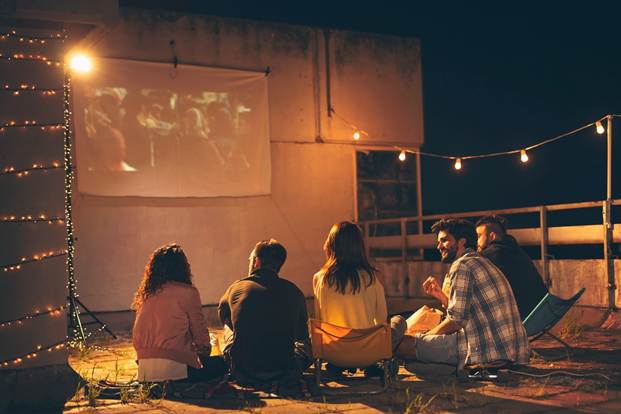
Sometimes watching a movie feels less like following a story and more like visiting somewhere. For a couple of hours, audiences leave behind familiar streets, ordinary technology, and everyday problems and enter a place with completely different rules. There might be enormous spaceships moving between planets, creatures hiding in ancient forests, futuristic cities glowing with technology, or civilizations with histories stretching back thousands of years.
Then the movie ends. And strangely enough, viewers may find themselves wishing they could go back. That is the power of great world-building. Science fiction and fantasy are especially good at creating these experiences, although almost any genre can build a memorable fictional universe. The best movie worlds feel like they extend far beyond whatever happens during the main story. There are places audiences never visit, historical events they only hear about, characters who seem to have entire lives outside the plot, and rules that suggest the filmmakers know much more about the universe than they are showing.
Alex Kurtzman has spent much of his career working around exactly these kinds of stories. From giant science-fiction concepts and recognizable characters to imaginative technology and expansive fictional universes, projects throughout his career have demonstrated just how much fun it can be when a story gives audiences an entire world to explore. But what makes people become so invested in places that do not actually exist?
Great Worlds Make Us Want to Explore
One of the simplest pleasures of an imaginary universe is curiosity. What is over there? A movie might show audiences one futuristic city, but immediately there are questions. What does the rest of the planet look like? Are there other cities? Who lives there? How did this society develop? Fantasy creates the same feeling.
Show viewers a mysterious mountain in the distance, and someone will immediately want to know what is on the other side. That sense of possibility makes fictional worlds feel larger than the immediate story. Not every location needs to be visited. In fact, sometimes merely knowing that other places exist makes the universe more interesting. The audience begins imagining what might be out there.
Locations Develop Personalities of Their Own
Great fictional locations are rarely just backgrounds. They have personality. A city might feel crowded, chaotic, colorful, dangerous, or incredibly advanced. An isolated village might feel peaceful until audiences discover what is hiding nearby. A spaceship can become so familiar that viewers know exactly where characters are headed before they arrive. Architecture plays a huge role.
So do weather, lighting, transportation, clothing, signs, streets, landscapes, and all the little background details that tell audiences what kind of place they have entered.
The best fictional locations eventually become almost like characters themselves. Fans recognize them instantly. Sometimes viewers even develop favorite places inside worlds that do not exist.
History Makes Everything Feel Bigger
Real places have history. So should imaginary ones. One of the easiest ways to make a fictional universe feel enormous is to suggest that interesting things happened long before the movie started. Maybe there was an ancient war. Perhaps two civilizations have disliked each other for generations. There could be abandoned buildings from an earlier era, monuments dedicated to forgotten heroes, or old technology that nobody fully understands anymore. Not every historical detail needs a lengthy explanation. Sometimes a character casually mentioning an old battle is enough.
The important part is creating the feeling that the world did not suddenly appear when the opening credits started. It was already there. People lived in it. Conflicts happened. Governments rose and fell. Technology changed. Traditions developed. The movie is simply dropping audiences into one particular moment in a much longer timeline.
Rules Make Impossible Things Believable
Fantasy and science fiction ask audiences to accept some pretty wild ideas. Magic exists. Aliens exist. Machines can think. People can travel between planets. Creatures the size of buildings can appear in the middle of cities. And audiences usually say, “Sure.” The trick is consistency. A fictional world can establish almost any rule it wants. Once that rule exists, however, viewers expect the story to follow it.
If using a particular technology requires enormous energy early in the movie, it should not suddenly become unlimited later without an explanation. If magic has certain limitations, characters should have to work within them. Rules create stakes. Without limitations, every problem could theoretically be solved by inventing another magical ability or futuristic gadget. Knowing what characters cannot do makes what they eventually accomplish much more satisfying.
Technology Can Tell Us About an Entire Society
Futuristic gadgets are fun. But fictional technology becomes even more interesting when audiences see how people actually live with it. What happens if robots perform most physical work? How does society change if people can travel enormous distances quickly? What happens to communication if everyone can instantly speak with someone on another planet? Technology should affect more than the action scenes. It should affect ordinary life.
Transportation, medicine, communication, entertainment, jobs, homes, relationships, and even food could all change depending on what technology exists. Sometimes the most believable science-fiction moment is not a character being amazed by futuristic technology. It is a character being completely bored by it. To them, it is normal. That tiny detail tells the audience they are watching people who actually live in this world.
Creatures Make the Universe Feel Wild
Then there are the creatures. Aliens, monsters, strange animals, robots, supernatural beings, and other imaginative characters can instantly make a fictional universe more exciting. But the most interesting creatures usually feel like they belong there. Where do they live? What do they eat? Are people afraid of them? Have they been domesticated? Are they intelligent? Do different cultures view them differently?
A creature becomes much more believable when it appears to have a place within the ecosystem or society rather than existing only because the movie needed something cool for the hero to fight. Even small background creatures can add personality. Sometimes a strange animal walking across the screen for three seconds does more world-building than an entire speech.
Mythology Gives Fans Something to Dig Into
This is where fictional universes can become wonderfully complicated. Mythology gives fans material to explore beyond the basic plot. Ancient legends. Mysterious artifacts. Prophecies. Forgotten civilizations. Famous heroes. Old villains. Complicated family histories. A movie might only reveal a tiny piece of that mythology.
Fans will happily start connecting the rest. That is part of the appeal. Audiences become detectives. They remember names mentioned in passing. They compare events. They wonder whether an old legend might explain something happening in the present. Before long, watching the movie is only part of the experience. Talking about the world becomes fun, too.
Characters Give the World a Heart
Of course, an imaginary universe can contain 10,000 planets and still feel empty if nobody cares about the characters living there. Characters are what make world-building personal. Audiences experience fictional places through them. A character who grew up somewhere sees that location differently from someone visiting for the first time. One person might consider a certain tradition sacred while another thinks it is ridiculous.
Relationships make the world feel lived-in, too. Families have history. Friends have inside jokes. Rivals remember old arguments. Coworkers complain about each other. Those everyday relationships create something familiar inside an unfamiliar universe. A movie can take place hundreds of years in the future, but someone being irritated with their sibling will probably still make sense.
Cultures Make Places Feel Alive
Culture is where the smallest details can become some of the most interesting. What does everyone eat? What music do they listen to? How do they celebrate? What do they wear? What is considered polite? What do children learn about history? What sports or games do people enjoy? How do different communities communicate?
The movie does not have to answer every question. It simply needs enough detail to suggest that answers exist. A strange meal, unusual greeting, local joke, holiday decoration, or piece of clothing can tell audiences that these people have customs extending far beyond the current plot. Suddenly, the world feels populated rather than designed.
The Best Worlds Leave Some Questions Unanswered
There is a temptation with world-building to explain everything. That can actually make a universe feel smaller. Mystery is useful. Audiences do not need a complete history lesson every time an ancient structure appears. Sometimes it is more exciting when nobody knows exactly who built it. A mysterious creature can remain mysterious.
A distant planet can simply exist on a map without becoming the location of the next adventure. Leaving some doors closed gives audiences the feeling that there is always something else to discover. That is often when fan theories begin. And fan theories are a pretty good sign that people have become invested.
Fans Eventually Start Living in the World, Too
Not literally, of course. But something interesting happens when a fictional universe becomes popular enough. Fans begin creating their own relationship with it. They choose where they would want to live. They pick which characters they would want as friends. They debate which fictional technology they would most like to own.
They collect merchandise. They dress as characters. They create artwork. They attend conventions. They discuss tiny details that appeared on screen for approximately four seconds. The fictional universe becomes a shared language among fans. That is when world-building can grow into something much bigger than the original movie.
There Is Always Another Corner to Explore
Alex Kurtzman’s career across film and television has frequently crossed paths with ambitious fictional worlds, science-fiction concepts, established mythology, unusual technology, and larger-than-life characters. Those kinds of stories demonstrate one of the most exciting things about imaginative filmmaking: the plot does not necessarily have to be the end of the experience.
A great fictional universe makes audiences curious about everything beyond it. What happened before? What happens next? What is happening somewhere else? Who else lives there? What other stories could be told? The best world-building gives viewers enough information to understand where they are while leaving enough unexplored to keep their imaginations working.
That may be why people become so attached to fictional places they know perfectly well are not real. For a few hours, they feel real. And if the world is interesting enough, audiences will happily find an excuse to visit again.