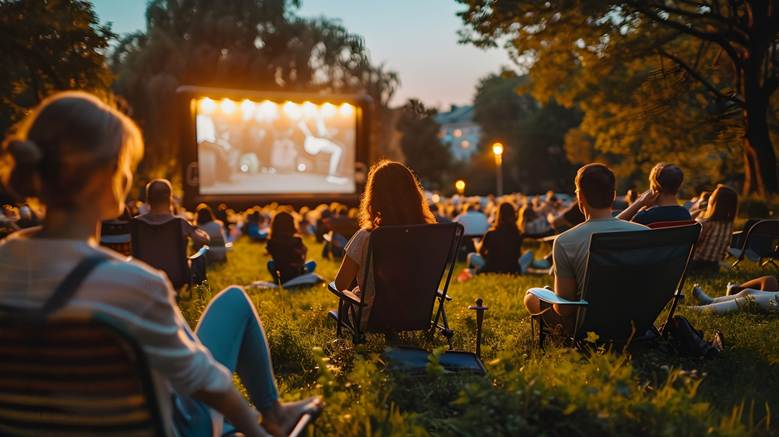
There is something special about a great summer blockbuster. These are the movies designed to make audiences grab some popcorn, settle into a theater seat and spend a couple of hours watching something much bigger, louder and more exciting than everyday life. Summer movies can involve superheroes, dinosaurs, spies, aliens, giant monsters, natural disasters, impossible missions or adventures in completely imaginary worlds. They do not even have to be action movies. Comedies, animated films, science-fiction adventures and fantasy stories have all found huge audiences during the summer months.
What connects the best summer blockbusters is not necessarily a specific genre. It is the experience. A successful blockbuster feels like an event. Alex Kurtzman explains that it gives audiences characters to root for, memorable moments to talk about afterward and enough spectacle to justify seeing everything on the biggest screen available. At the same time, bigger does not automatically mean better. Explosions and special effects can grab attention, but audiences usually need something more to stay invested. The most entertaining summer movies tend to combine several familiar ingredients: likable heroes, exciting action, humor, memorable villains, impressive spectacle and, perhaps most importantly, a healthy dose of escapism.
A Hero Worth Rooting For
A blockbuster can have the biggest action sequences imaginable, but they will not mean much if audiences do not care about the person running through them. That is why memorable heroes are so important. The classic blockbuster protagonist does not necessarily need to be the strongest, smartest or most capable person in the story. In fact, a few weaknesses usually make the character more interesting. Audiences want somebody they can understand.
Maybe the hero is completely unprepared for the adventure ahead. Perhaps the character is highly skilled but struggles with relationships. Some heroes are reluctant participants who would much rather be somewhere else. Others confidently charge into danger and discover that they have seriously underestimated the problem.
Whatever the setup, the audience needs a reason to care.
Personality helps enormously. A great blockbuster hero might be charming, funny, stubborn, courageous or occasionally ridiculous. The best characters tend to have enough flaws to feel human while still possessing qualities that make audiences want them to succeed. That emotional connection turns spectacle into a story. A collapsing building is visually impressive. A collapsing building containing a character audiences have spent an hour getting to know is suspenseful. There is a big difference.
Action Sequences Need More Than Explosions
Huge action scenes are practically a summer-blockbuster tradition. Car chases, aerial battles, collapsing cities, elaborate fights, enormous creatures and last-second escapes all fit comfortably into the category. But memorable action requires more than simply putting as much chaos as possible on screen. The audience needs to understand what is happening. Who is chasing whom? Where are the characters trying to go? What happens if they fail? What obstacles are standing in their way? The best action sequences often have a miniature story of their own. There is a goal, complications arise, characters improvise and the situation becomes increasingly difficult. Variety matters, too.
If every sequence involves the same type of action at an even bigger scale, the spectacle can eventually become exhausting. A good blockbuster changes the rhythm. A giant set piece might be followed by a quieter character scene. A chase could emphasize speed, while a later sequence focuses on suspense. Sometimes a relatively simple scene becomes the one audiences remember most because it has a clever idea behind it. Scale is useful, but creativity is better.
Humor Gives Everyone a Chance to Relax
Even movies about saving the world can benefit from a good joke. Humor has become a major ingredient in many summer blockbusters because it helps balance the intensity. After a long action sequence or dramatic confrontation, a funny exchange gives audiences a moment to relax. It can also make characters more likable. Heroes teasing each other, reacting to absurd circumstances or occasionally acknowledging how ridiculous their situation has become can create some of a movie’s most memorable moments. The key is balance.
Too little humor can make a lighthearted adventure feel unnecessarily serious. Too much can make it difficult to believe the characters are genuinely worried about whatever enormous threat they are facing. The best blockbuster humor usually grows naturally from personality and circumstances rather than stopping the story for a joke. A nervous character might respond to danger differently from a fearless one. Two characters who constantly disagree can create funny interactions without undermining the stakes. Even a villain can occasionally be funny while remaining threatening. Humor works best when it feels like part of the movie rather than an interruption.
A Great Villain Can Make Everything Better
Heroes get their names on the posters, but villains frequently get the best scenes. A memorable antagonist gives the protagonist something meaningful to overcome. More importantly, a great villain creates a specific kind of problem. The antagonist might be physically stronger than the hero, intellectually superior, incredibly powerful or simply unpredictable. The most interesting villains often challenge the hero personally as well.
Motivation helps. A villain does not necessarily need a sympathetic backstory, but audiences should understand what the character wants. Money? Revenge? Power? Recognition? Control? Destruction? Something much stranger? Clear motivation gives the conflict direction. Personality is just as important.
Some blockbuster villains are terrifying. Others are charismatic, funny, theatrical or strangely charming. A few become so entertaining that audiences look forward to their scenes almost as much as those featuring the heroes. The ultimate test is simple: Would the movie still be nearly as interesting without this villain? If the answer is no, the filmmakers probably created a pretty good antagonist.
Spectacle Should Feel Like an Event
Summer blockbusters have always been associated with spectacle. Audiences want to see something they cannot encounter during an ordinary Tuesday afternoon. That might mean enormous creatures, futuristic cities, elaborate fantasy worlds, impossible vehicles or breathtaking locations. It can also mean watching talented stunt performers accomplish something that makes everyone in the theater wonder, “How did they do that?”
Modern filmmakers have more tools than ever for creating spectacle. Computer-generated effects can produce environments and characters that would have been nearly impossible to put on screen in previous generations. Practical effects, elaborate sets, miniatures, makeup and stunt work can add physical realism.
The most memorable movies often find ways to combine techniques. But spectacle works best when audiences are given time to appreciate it. A breathtaking environment is not particularly breathtaking if the movie cuts away before viewers can understand what they are seeing. Sometimes the most effective blockbuster moment is not an explosion at all. It is the quiet reveal of something enormous, strange or beautiful. Wonder can be just as powerful as destruction.
The Movie Needs a Sense of Adventure
A great summer blockbuster should feel like it is taking audiences somewhere. That destination can be literal. Characters might travel around the world, explore another planet or enter a hidden civilization. But adventure can also come from the story itself.
There should be a feeling that anything could happen next. Unexpected alliances, strange locations, surprising discoveries and escalating challenges help maintain that sense of momentum. Even when audiences understand the basic formula, the movie should find creative ways to play with it.
This is particularly important for familiar franchises. When viewers already know the characters and the world, filmmakers need to introduce something fresh without removing everything people liked in the first place. That balancing act is difficult. Audiences want familiarity and novelty at the same time. The best sequels and franchise installments often succeed by keeping the core appeal while introducing a new problem, environment or character dynamic.
Supporting Characters Can Steal the Movie
Not everyone needs to be the hero. Summer blockbusters frequently benefit from colorful supporting characters who make the fictional world feel bigger and more entertaining. There might be a sarcastic best friend, eccentric scientist, exhausted boss, mysterious mentor, unlikely sidekick or character who clearly has no business being involved in the adventure but somehow ends up there anyway.
These characters can provide humor, emotional support or important information. They can also become unexpected audience favorites. Strong supporting characters prevent the movie from feeling like one person moving mechanically from action sequence to action sequence. They create relationships. And relationships give the story emotional stakes beyond simply defeating the villain.
The Stakes Can Be Huge, but They Should Also Be Personal
Blockbusters love enormous stakes. The city is in danger. The country is in danger. The planet is in danger. Occasionally, the entire universe is having a particularly bad day.
There is nothing wrong with that. Saving the world is a perfectly reasonable summer-movie activity. But enormous stakes can become strangely abstract.
Millions of unnamed people being threatened may sound important, but audiences often connect more strongly with something smaller and more personal. Maybe the hero is trying to protect a family member. Perhaps two friends need to repair their relationship. Someone might be trying to prove themselves, return home or make up for a previous mistake. Those personal goals give the larger conflict emotional weight. The hero may technically be saving civilization, but the audience understands exactly who or what the character is fighting for.
A Little Escapism Goes a Long Way
Perhaps the most important ingredient in a summer blockbuster is escapism. People do not always go to these movies looking for an exact reflection of ordinary life. Sometimes they want dinosaurs, spaceships, secret agents, superheroes and impossible adventures. For a couple of hours, the movie offers permission to go somewhere else.
Escapism does not mean the story has to be completely mindless. Blockbusters can explore serious themes, complicated characters and genuine emotions. They can simply do those things while something spectacular is happening in the background. That combination is part of the appeal. Audiences can care about the characters while enjoying the fantasy.
The Best Blockbusters Remember to Have Fun
There is no exact formula for creating a great summer movie. If there were, every major studio release would become an instant classic. Still, the most beloved blockbusters tend to understand what audiences came to experience. They provide heroes worth cheering for, villains worth remembering and action sequences that are exciting rather than merely enormous. They know when to make audiences laugh, when to slow down and when to reveal something spectacular. Most importantly, they create a sense of adventure.
A summer blockbuster does not necessarily have to change cinema forever. Sometimes its job is much simpler. It needs to gather a room full of strangers, turn down the lights and make everyone forget about the outside world for a little while. When the characters are memorable, the adventure is exciting and the audience walks out wanting to talk about what they just saw, the movie has done exactly what a great blockbuster is supposed to do.